A concrete slab is judged by its surface, but it is determined by everything under it. Preparation, reinforcement and curing decide how a slab performs for decades. Here is a general overview of the sequence.
Site preparation and subgrade
Work begins with clearing the area and removing vegetation, organic soil and unsuitable material. Organic material decomposes and compresses, so leaving it under a slab creates voids later.
The remaining subgrade is shaped and compacted in controlled lifts. Uniform support matters more than raw strength: a slab bridging a soft spot will crack at the weak point, even if every other area is solid.
Grading and drainage
Grading sets both the finished elevation and the direction water travels. Surfaces are typically sloped so runoff moves away from buildings rather than collecting against them.
Base material is often placed over the subgrade to provide a stable working surface and help distribute loads. Depending on the project, a vapor retarder may be installed beneath the slab to limit moisture movement upward.
Forms and reinforcement
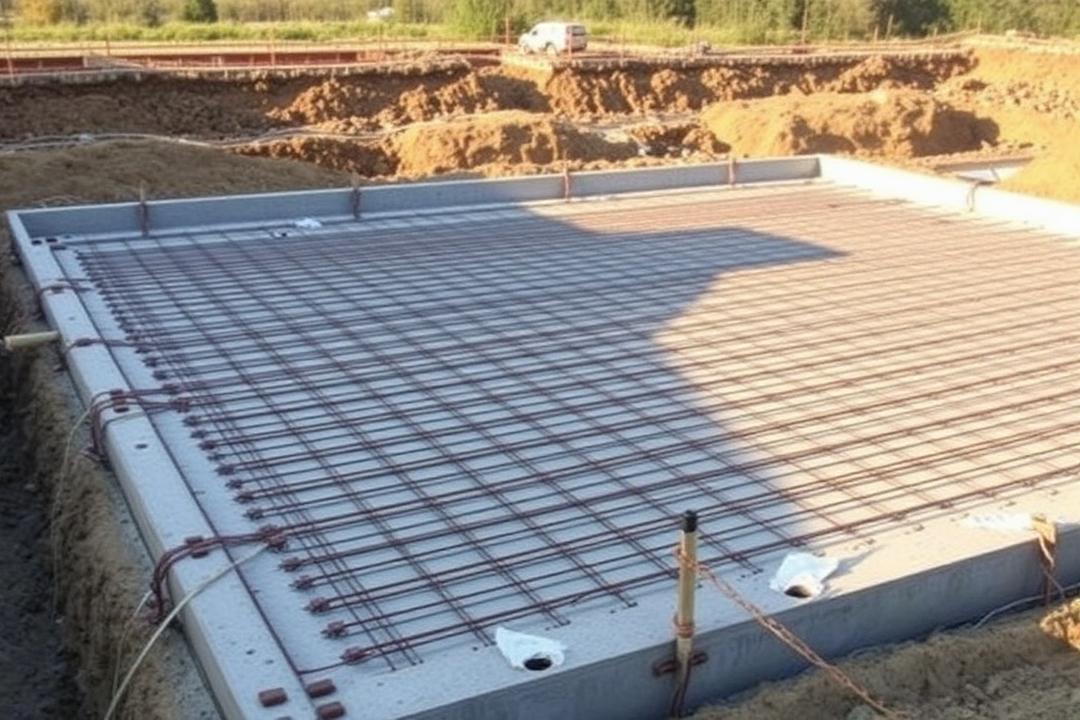
Forms establish the slab edges, thickness and elevation. Straight, braced, correctly staked forms are the difference between clean edges and a surface that needs rework.
Reinforcement — commonly reinforcing bar, welded wire or post-tension tendons depending on the design — is positioned within the slab thickness and supported so it stays in place during the pour. Reinforcement lying on the ground contributes very little.
- Forms set edges, thickness and finished elevation.
- Reinforcement is supported at the correct height, not laid on the subgrade.
- Embedded items and sleeves are located before concrete arrives.
Placement and finishing
Concrete is placed continuously, consolidated, screeded to grade and then floated. Finishing is timed against how the concrete is setting rather than against the clock, and working the surface too early traps water and weakens the top layer.
Control joints are cut or tooled at planned intervals. Concrete shrinks as it cures and will crack; joints decide where those cracks occur instead of leaving it to chance.
Curing is not the same as drying
Curing keeps moisture in the concrete so the chemical reaction can continue. Slabs allowed to dry too quickly, especially in heat and wind, tend to develop surface cracking and reduced durability.
Curing methods vary by project and conditions and may include water curing, coverings or curing compounds. Loading a slab before it has gained adequate strength is a common and avoidable cause of damage.
A note on scope
This article is general educational information about construction practice. It is not engineering, legal or code-compliance advice, and it does not guarantee any particular outcome on a specific property. Requirements vary by jurisdiction, soil conditions and project type.
Discuss your project
If you are planning work like this, send the details and our team will review the scope with you.
Request an estimate